
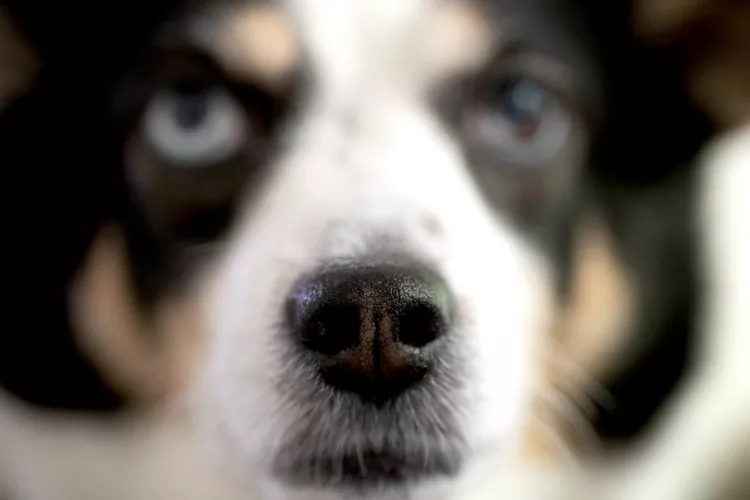
You might have heard that feeling a dog's nose can reveal something meaningful about its health, but what do the temperature and wetness of your pup's nose really tell you? The truth is: not much. A healthy dog may have a warm, dry nose. A sick dog could have a cold, wet nose. Learn why a dog's nose is often wet and what signs may indicate that a dog is sick.
Why Are Dog Noses Wet and Cold?
Dogs keep their noses wet and cool by licking. Some people theorize that nose moisture helps intensify scents, a leftover benefit from dogs' wilder days when they needed super-sensitive noses to find food, identify territories, and connect with mates. Others postulate that the added moisture helps regulate body temperature. Since dogs do not sweat, the process of evaporative cooling may help them chill out—literally.
What Does a Dry Nose Mean?
It is normal for a dog's nose to be dry upon waking from a nap or a night's sleep. Dogs don't lick their noses during sleep, so the surface naturally dries out a bit. When the nose is drier, it may also feel warmer due to the absence of evaporative cooling.
On rare occasions, a dog's dry or warm nose may indicate a problem. If your dog is unwell, the warm dryness of its nose will likely be accompanied by other signs of illness, such as:
- Lethargy
- Vomiting
- Diarrhea
- Fever
These symptoms warrant a vet visit, regardless of how your dog's nose feels.
When Is a Dog's Nose Not Normal?
While nose temperature and moisture are not reliable indicators of illness in dogs, there are warning signs that can appear on the surface of the nose. If you notice any of the following symptoms, schedule a vet visit right away.
Hyperkeratosis
Some experts believe the sickly dog nose myth started with the canine distemper virus, which can cause hyperkeratosis (thickening) of the nose and footpads. When distemper was more common, before vaccines, a cool and wet nose indicated that a dog did not have the disease. Hyperkeratosis is still not normal and should be evaluated by a veterinarian.
Redness, Sores, or Bleeding
Redness, open sores, scabs, or bleeding can indicate minor problems like an abrasion or cat scratch as well as major ones like certain kinds of cancer or autoimmune diseases like discoid lupus erythematosus (DLE), a cutaneous form of lupus.
Color Change
An autoimmune disease called pemphigus can cause patches of red skin on the nose that develop into blisters and open sores; changes in nose color may also occur. Not all nose color changes are dangerous, but accompanying skin texture changes are indicative of illness.
Nasal Discharge
Occasionally, a small amount of clear fluid may drip from a dog's nose, and this isn't a concern. However, if the liquid becomes profuse, bloody, or yellow/green in color, something is not normal.
Fever
If your dog has a fever or is overheated due to sweltering environmental conditions, its nose may be alarmingly hot. When in doubt, use a rectal thermometer to take your dog's temperature or enlist the help of your vet to make sure your dog's temp is within the healthy range (between 101 and 102.5 degrees Fahrenheit).