Peanut butter is a delicious and nutritious snack for us, but can cats eat peanut butter? Cats are often picky eaters and may not like the taste or smell of peanut butter. But if your cat is begging for a lick of your peanut butter, is it safe to indulge them? Peanut butter is not inherently toxic to cats, but there are a few good reasons not to feed it to them.
Is Peanut Butter Toxic to Cats?
Cats are curious creatures, and many would love to share your lunch or snack. Peanut butter may appeal to your cat, and in most cases, in moderation, feeding them a dab of peanut butter would not be harmful. Peanut butter itself is not toxic to cats. Still, there are a few ingredients used in some kinds of peanut butter that may be problematic. Fats, oils, salt, sugar, and added artificial sweeteners can be harmful or even toxic to cats.
Ingredients in Peanut Butter to Avoid
If your cat is begging for a taste of your peanut butter, you must first know more about the spread you have and its ingredients. Always read labels and understand what you are feeding your cat to avoid any issues.
Xylitol
The first major ingredient to be on the lookout for is xylitol. Xylitol is an artificial sweetener that is used in peanut butter as well as cookies, cakes, and chewing gum, among other items. It may be listed in the ingredient list as xylitol or wood sugar, birch sugar, and birch bark extract.
Xylitol is highly toxic to dogs. Even a tiny amount of this sugar alcohol may lead to severe hypoglycemia and liver failure. It appears that cats may be somewhat more resistant to the toxic effects of xylitol, but research has not come to any definitive conclusion, and there have been reports of toxicity in cats. Because of this, you should never feed your cat any amount of a food containing xylitol.
Oils and Fats
There are other aspects of peanut butter that you should consider before feeding it to your cat. Peanuts contain high amounts of fat, and some peanut butter has added oils. These components may lead to gastrointestinal upset such as vomiting, stomach pain, and diarrhea. If fed frequently, a cat eating peanut butter may gain weight and may not eat enough of their main diet, leading to nutritional deficiencies.
Salt and Sugar
Peanut butter can contain high levels of both salt and sugar. Excess salt, in large quantities, may lead to serious gastrointestinal issues such as vomiting, diarrhea, abdominal pain, and excessive thirst. Longterm overeating of salt can also lead to heart and blood pressure problems. As obligate carnivores, cats’ systems are not adept at handling large amounts of carbohydrates. The excess sugar sometimes found in peanut butter, which is a carbohydrate, could lead to heart issues, excessive weight gain, and diabetes.
Healthy Treats for Cats
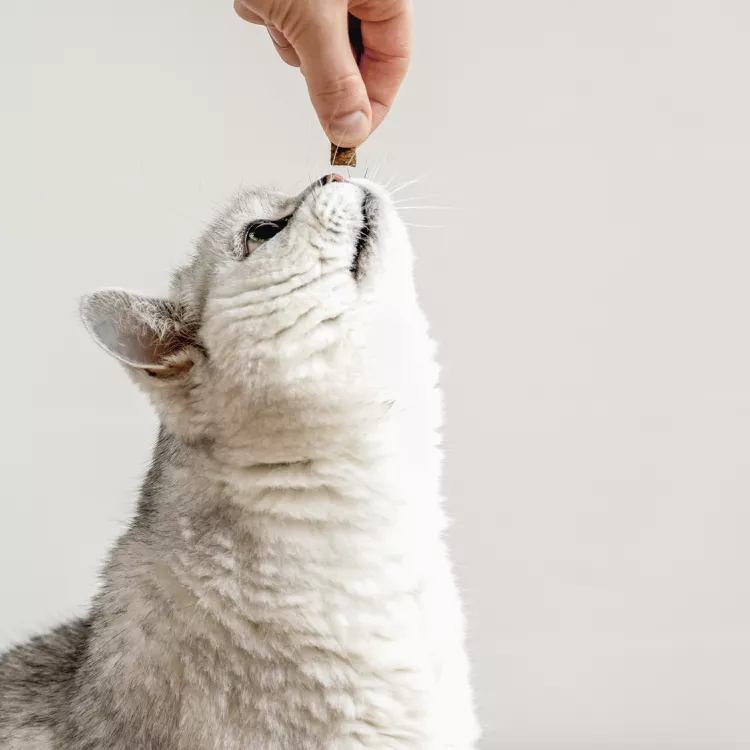
Giving your cat a treat can be an excellent method for bonding with them. Like most animals, cats are food motivated, and treats can be a great positive reinforcement tool. When choosing a treat for your cat, look for nutritionally complete options made especially for cats. There are many commercial cat treats available in pet food stores. You may also try homemade cat treats or products such as catnip and cat grass.
Always remember that treats of any kind should be fed in moderation and should make up no more than 10 percent of your cat’s daily caloric intake.
Final Thoughts
Even if there are no toxic ingredients in the peanut butter you are eating, it is not a healthy choice for your cat. Though a small nibble is unlikely to harm them, feeding your cat human food can lead to unpleasant behaviors such as begging and snatching food. When your cat begs for a bite of your peanut butter, it is likely best not to give in to them. This is a bad habit to encourage as there are human foods that are toxic to cats, and your cat may ingest something harmful in the future if they are used to being fed human food.
It is also essential to ensure that your cat gets adequate nutrition to keep them healthy. Cats have precise dietary requirements different from humans and other animals. If your cat is fed too many snacks, including peanut butter, they may not be hungry when it comes time to eat their cat food. This can lead to nutritional deficiencies and potential health problems.