
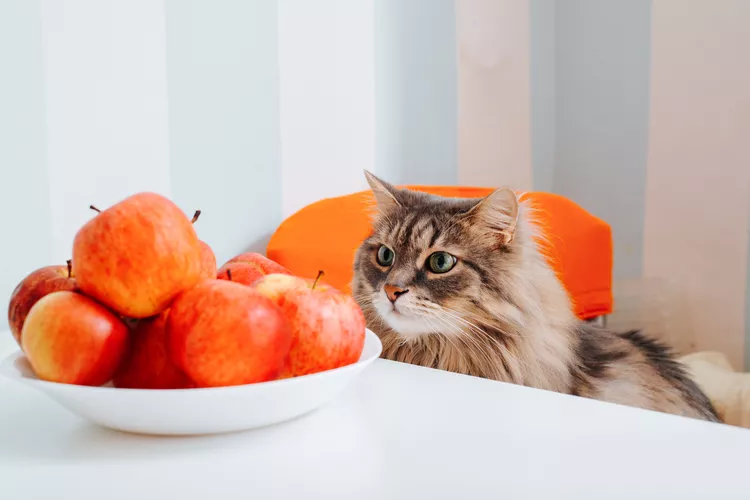
Apples are one of the most popular fruits and you can find them almost anywhere. Coming in countless varieties, there’s an apple for every palate. But are apples as nutritious for cats as they are for people? What should you be aware of before offering your cat apples?
Are Apples Safe for Cats?
While apples can be considered a healthy snack, there are things to consider before offering them to your cat. The stems, leaves, and seeds of an apple all contain a chemical called amygdalin. This chemical releases cyanide, a potentially deadly chemical, into the blood stream as it is digested. However, it releases it in such small amounts, a person would have to ingest anywhere from 83 to 500 apple seeds to develop cyanide poisoning. That being said, it’s best for both you and your cat to avoid the seeds, in addition to any leaves and stems.
It’s also important to note that cats are obligate carnivores. Apples do not contain a significant amount of protein, and they don’t contain any taurine at all. Cats cannot synthesize taurine on their own and thus require it in their diet. Apples are also high in fiber and, while added fiber can help your cat overcome a bout of diarrhea, too much fiber can also cause gastrointestinal upset. So, while they can digest apple, it’s best to feed them to your cat in moderation.
Additionally, there was a study in cats that examined the digestibility of dried apple pomace specifically. Dried apple pomace is a byproduct of certain apple processing from making cider, juice, and vinegar. This study showed that the dried apple pomace actually decreased the digestibility of the crude protein in the cats’ diet, pointing to the possibility of whole apples could make it harder for your cat to digest protein in their food.
However, the study didn’t look at whole, raw apples, and because nutrients in a food can have different levels of bioavailability based on how that food is prepared, apples prepared differently may not have such an adverse effect on protein digestion.
What Kind of Apples Can Cats Eat?
Cats don’t have receptors to taste for sweetness, so they won’t necessarily have the distinct preferences for different varieties like we do. That doesn’t necessarily mean any old variety will be fine to try. Sweeter varieties will be higher in sugar, and this is something your cat could definitely do without. Excess sugar in their diet can also cause gastrointestinal upset and complications if your cat is diabetic.
Safe Ways to Feed Apples to Your Cats
Walk around any fall festival, and you can get inspired to prepare apples in all sorts of ways. When it comes to your cat, though, not all are equally healthy. A small piece of a raw apple is perfectly fine for your cat to nibble on. Cooked apples can be easier to chew and digest, although a lot of apples cooked for human consumption will also contain added sugars and spices that won’t be as healthy for your cat. Dried apples, apple juice, and candy apples are higher in sugars and should definitely be avoided.
Apples are a staple food item for most homes. If your cat seems curious the next time you’re enjoying this healthy fruit, feel free to offer them a small piece.