
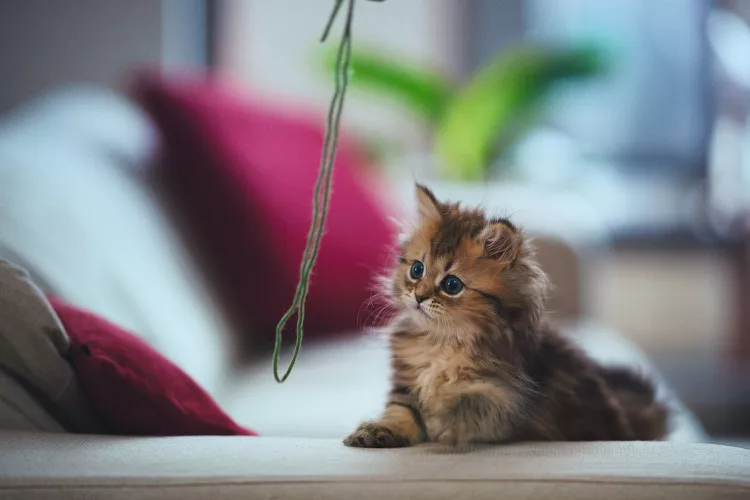
Cats love to play with small items that they can bat around with their paws, and yarn is no exception. It's lightweight, changes shape, and can be picked up easily by any cat. But yarn can also cause some serious problems in cats, so it's important to understand the risks as well as find some alternative toys for your cat.
Concerns With Yarn
- Choking - Chewing on yarn can be appealing to some cats. This is worrisome, because items like yarn can cause your cat to choke if a piece gets lodged in the back of its mouth or is inhaled. If a cat is choking on yarn, the piece needs to be dislodged or removed immediately.
- Foreign body - If a cat swallows yarn, it will end up in the gastrointestinal tract. Yarn and other items that shouldn't be eaten are referred to as foreign bodies when they are inside your cat. Some foreign bodies will be vomited up or pass throughand exit the body when a cat defecates, but other items get stuck and cause an obstruction or other problems, just like in a dog.
- Obstruction - Obstructions are very serious, and surgery is often necessary to remove the object. Yarn can be especially problematic since long pieces can get attached (looped around the tongue, for example) and stretched out through the gastrointestinal tract where it is called a linear foreign body. As the stomach and intestines attempt to move food through peristalsis (rhythmic contractions), yarn can cut through intestinal walls resulting in potentially fatal abdominal infections.
- Entanglement and constriction - Yarn can be fun to play with, but it can also get twisted and tangled around a cat's leg, foot or tail. If your cat gets tangled up in yarn, the blood supply could get cut off from that part of the body. This causes pain and swelling initially, but if the yarn isn't removed, constriction can also result in tissues dying. This means toes, feet and tails can die and fall off just because yarn gets wrapped around them too tightly.
How to Keep Your Cat Safe From Stringed Dangers
The obvious answer here would be to simply keep stringed items out of your home if you have a cat, but this isn't entirely plausible. Aside from opting not to use an item in your home that can pose a danger to your cat (like tinsel on your Christmas tree), you need to be careful with how you store and use these items. Children should be taught the dangers of leaving their ribbons, hair ties, and other stringed items out if a cat is present, and adults should watch for any stringed items left lying within reach of a cat. Sewing, knitting, and crocheting supplies should be properly stored, kitchen twine shouldn't be left out on the counter unattended, and curtain or window blind strings should be tied up so a cat cannot get tangled in them. Playful kittens are especially at risk for getting into trouble with stringed items, but that doesn't mean adult cats are safe from stringed dangers.
What To Do If Your Cat Ate String or Yarn
If your cat consumed a stringed item, call your veterinarian for advice. At the very least, you'll need to monitor your cat for vomiting, poor appetite, changes in defecation, or lethargy. If you notice these or any other symptoms of illness, take your cat to your veterinarian immediately.
Alternatives to Yarn
While cats may love to play with yarn and other stringed items, there are much safer cat toys that you can provide to your feline friend at play time. Small stuffed toys, fake mice, small balls, and other toys that can be carried and batted around make great options for cats to play with. Cats should be supervised when playing with toys that include strings, like kitty wands or fishing poles.